

Welcome to the legacy page of New York independent record label Fang Records (est 1980). Founded in Maryland by Chris Rael & Michael Osheroff, Fang functioned as a cooperative of indie bands exploring concepts & styles outside mainstream commercial tastes of the era. The progressive music world found Chris through Fang in the early ‘80s. The label was vigorously busy in NYC from the late ’80s through mid-noughties & has served as a friendly island for its legacy groups ever since.
Fang Legacy Bandcamp Re-release: MARTY MATZ - PIPE DREAMS 2001

Fang Legacy Bandcamp Re-release: JAYNE COUNTY - WASH ME IN THE BLOOD (OF ROCK N ROLL) 2000

Fang Legacy Bandcamp Re-release: THIRSTY EARS: FANG RECORDS BANDS LIVE AT THE KNITTING FACTORY 1991

New from the Lower East Side Biography Project! On May 5, 1990, Verna Gillis presented Church of Betty, 101 Crustaceans & the Mommyheads at Washington Square Church in Greenwich Village, putting our alt-indie label Fang Records on the downtown art-world map.
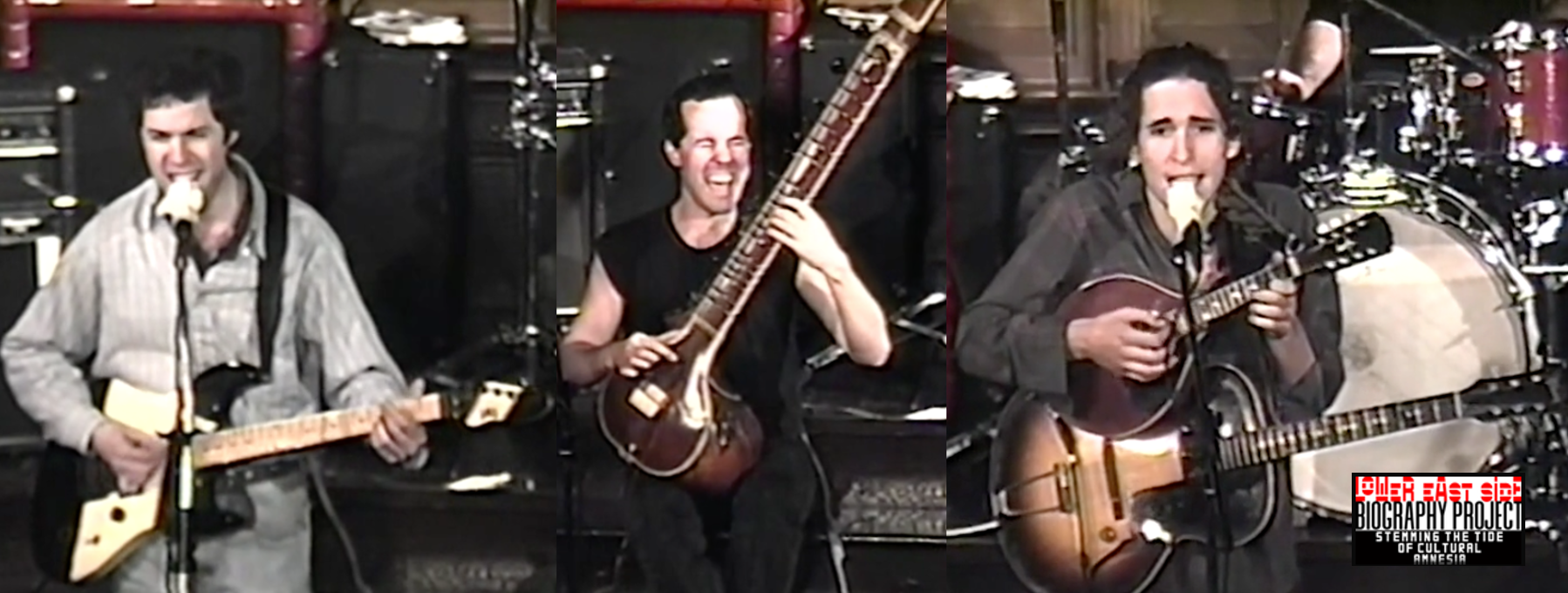
101 CRUSTACEANS CHURCH OF BETTY THE MOMMYHEADS
A brief history of Fang Records
Fang was a do-it-yourself dream brought to life by a close friend in my early twenties. Michael Osheroff and I were best pals since junior high. We graduated from high school in Silver Spring, MD in ’79, when I got more serious about playing. Osh invested in me and my nutty projects. Our name was inspired not by Bela Lugosi but by Osh's Uncle Billy, a successful local businessman whose nickname was Fang. Our first record was a 7-inch 4-song EP by my first band, Ducklips.
In the early ’80s I found my way to Tom Scott’s home studio, Black Pond in Rockville, MD, where I fell in love with recording. Influenced by Tom’s band, the Muffins, my early work was largely experimental. These early Fang cassettes garnered warm reviews in alternative music mags like Option and Sound Choice, which meant the world to me. Somehow the work traveled to Poland where, to my delight, Fang cassettes became heavily bootlegged.
I moved to New York in ’86 and lived around the East Village and Lower East Side. A builder of creative community and champion of new music, I built Fang into a musicians’ coop in which groups promoted and distributed their wares under the Fang umbrella. Our first LP, Antipop (1988) was a compilation of four artists: the Mommyheads, Life in a Blender, Plugbunnies Inc. and Church of Betty (aka, me solo).
The Mommyheads’ Acorn LP put Fang on the indie music map in ’89. Life in a Blender was one of downtown’s busiest bands. I began traveling to India to study music and bring what I learned back into my own compositions at home. We all played often at CBGB’s and every other downtown venue. I routinely organized bills of up to six bands a night.
Fang artists were among the first wave of bands to perform at the original Knitting Factory on Houston Street in the late ’80s. By the early ’90s, the label encompassed Ed Pastorini’s 101 Crustaceans, The Very Pleasant Neighbor, composer Brian Woodbury, legendary Brown University band Dolores, B.O.X., early work by Oren Bloedow, Marlon Cherry, avant-jazz duo Iconoclast and others.
In the mid-’90s Betty traveled to international festivals, meeting accomplished Indian artists from all over the world. I partnered with British-Indian pop star Najma, Woodbury and Church of Betty drummer Jonathan Feinberg to record a contemporary reimagining of the film songs of Bollywood legends SD and RD Burman. Forbidden Kiss was released on Shanachie Records, but the Fang aesthetic grew broader and more multicultural during these years.
Meanwhile, both the Mommyheads and the band Hunk were signed to Geffen Records and brought me into their projects as a guest. Additional artists made albums for Fang in the late ’90s, including Dudley Saunders, Mecca Bodega, and performance legend Penny Arcade. Kenny Siegal and Brian Geltner of Hunk and I formed a new recording trio called The Hand, which made a series of well-loved underground rock albums during these years.
The Hand joined forces with producers Bryce Goggin and Danny Kadar to establish The Kennel, our recording studio in mid-’90s Dumbo, Brooklyn, where the Fang roster expanded still more. Tabla master Samir Chatterjee, punk rock legend Jayne County, composer Michael Holt, the band Ida, Tears for Fears’ Curt Smith, Beat poet Marty Matz and a cavalcade of brilliant guests made recordings there in the late ’90s and early 2000s.
With too many songs for one band to play, Siegal and Geltner formed Johnny Society while I returned to Church of Betty. We continued to play in each other's projects, like an extended family of studio musicians. Through working with Najma, I met London-born tabla master Deep Singh. The core quartet of Singh, drummer Feinberg, bassist Joe Quigley and myself drove a string of four Church of Betty albums during the band’s busiest years. We played regularly at the Bottom Line and most of New York City’s major public arts venues.
This whole scene thrived like a beehive until the mid-2000s, when groups began to scatter geographically. Fang has been less active in recent decades, but the coop’s members still release work under the Fang imprint now and then, myself included. Life in a Blender and Icononclast both released several new titles on Fang during the last 20 years, keeping the flame alive.
An archive is being created to document a quarter-century of authentic home-grown experimental art that meant something to the downtown community of New York City. The archival material shall offer a unique window into a grassroots art movement that never existed for profit but solely for the love and sharing of art itself, and made that model work to bring joy to audiences of substance in the foreboding city and beyond.
Chris Rael
Winter 2026
Contact legacy bands at the links below: